How much does a hearing aid cost?

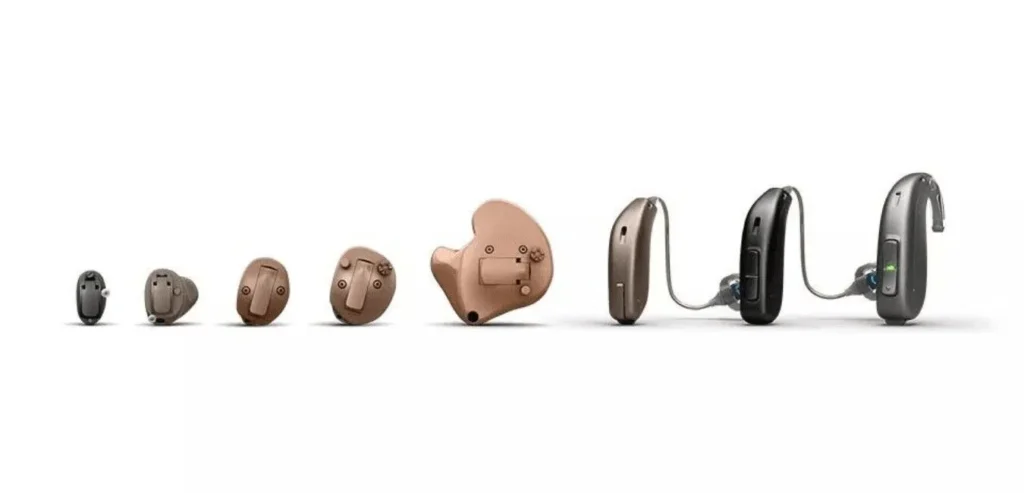
Display different types of hearing AIDS
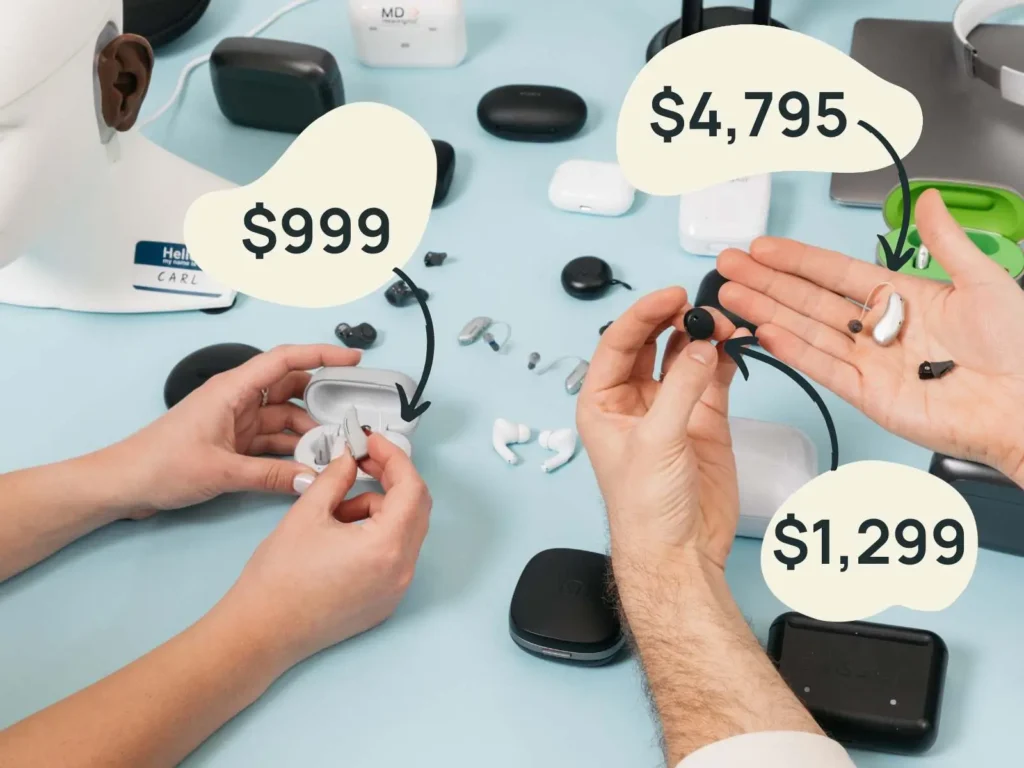
The couple went to get hearing AIDS

If you’re considering purchasing a hearing aid, you might be surprised to find that the price range in the market can be extremely wide—from cheap devices costing a few tens of dollars to high-end models that can go up to a few thousands. Why is there such a big price gap? Is an expensive hearing aid really better than a cheaper one? This article will provide you with a detailed analysis of the factors behind the price of hearing aids, helping you make a more informed decision when it comes to making a purchase.

Hearing AIDS of different sizes

First and foremost, the price difference of hearing aids is closely related to their types. Currently, hearing aids on the market are mainly divided into the following categories:

  • Price range: $100 – $500
  • Features: In 2022, the FDA in the United States approved Over-the-Counter Hearing Aids, allowing people with mild to moderate hearing loss to purchase them without a doctor’s prescription. These hearing aids are usually less expensive and have relatively basic functions, suitable for people with limited budgets or not-so-serious hearing problems.
  • Price range: $500 – $1000 per aid
  • Features: Dispensed by professional audiologists, these hearing aids come with advanced functions such as noise reduction, directional microphones, Bluetooth connectivity, etc., suitable for those with moderate to severe hearing loss.
  • Price range: $1000 – $5000 per aid
  • Features: Using the latest technologies such as AI-based noise reduction, adaptive environment recognition, wireless connectivity to smartphones, etc., and can even be custom-made with an earmold for the best comfort and sound quality.
  • Price range: $10,000 – $100,000
  • Features: Suitable for people with profound hearing loss or deafness, these devices require surgery for implantation and are expensive but highly effective.
Hearing AIDS of different prices

The materials used in cheap and expensive hearing aids are different. Hearing aids made from low-cost materials have a shorter lifespan and the sound amplification and reproduction will have a significant distortion, affecting listening quality and satisfaction. Expensive hearing aids use better materials, which last longer and are less likely to break. The sound reproduction is more realistic and clear.

Cheap hearing aids are more like a combination of speakers, amplifiers, and microphones. They simply amplify the sound without any processing, including amplifying the surrounding noise along with the sound into the ear canal. Expensive hearing aids have chips and algorithms. They process the collected sound, amplifying the speech sounds more and suppressing the noise. This makes the sound heard by the ear clearer and cleaner.

Cheap hearing aids can only simply amplify the sound, without noise reduction function, without strong sound interruption function, and are not friendly to the ears. Expensive hearing aids have an automatic noise reduction function, have an instantaneous loud sound interruption function, avoid too loud sound breaking the eardrum, and some expensive hearing aids have a Bluetooth direct connection function, which allows us to hear music and watch videos with a cleaner sound.

  • Prescription hearing aids are more expensive because they usually include hearing tests, personalized adjustments, and follow-up adjustment services, which all add to the cost.
  • OTC hearing aids are relatively cheaper because they do not need to test the patient’s hearing. The buyer can wear them directly after receiving the goods. They can only simply adjust the volume or choose from a few built-in sound amplification programs. Relatively speaking, the effect of OTC hearing aids is not as good as that of prescription hearing aids. Prescription hearing aids are suitable for people with mild and moderate hearing loss.
  • Well-known brands (such as Phonak, Oticon, Starkey) have high prices due to large R&D investment.
  • Emerging brands or affordable products have to sell at a lower price because they do not have brand recognition.
  • BTE (Behind-the-Ear): Usually cheaper because the larger size makes it easier to develop and produce, but it is relatively less discreet;
  • ITE (In-the-Ear) or IIC (Invisible-in-the-canal): Smaller, more difficult to develop and produce, so the cost is higher, and even custom ear molds are required, making them more expensive.
Cheap hearing AIDS and expensive hearing AIDS

✅Pros:

  • Affordable price, ideal for budget-conscious individuals.
  • OTC hearing aids are easily accessible and require no professional fitting.

❌Cons:

  • Lower sound quality, may amplify noise rather than clear speech.
  • Lack of personalized adjustments, potentially uncomfortable for long-term use.
  • Shorter lifespan, limited repair support.

✅Pros:

  • Offer a more natural, clear sound quality.
  • Adapt to different environments (e.g., restaurants, teleconferences).
  • Include professional fitting and after-sales service.

❌Cons:

  • Expensive, may exceed budget.
  • Require regular maintenance and battery changes (for some models).
Show two types of hearing AIDS
  • Mild or moderate hearing loss → OTC hearing aids might be sufficient.
  • Severe hearing loss → Professional fitting of digital hearing aids is advised.
  • If budget is a concern, consider payment plans or insurance subsidies.
  • Keep in mind: Hearing aids are a long-term investment, quality is more important than low price.
  • Choose brands that offer a trial period (e.g., 30-60 days).
  • Ensure included warranty and adjustment services.
  • Even for OTC hearing aids, it’s advisable to get a hearing test first to ensure the right model.
The exhibition hall displays different hearing AIDS

As technology advances and market competition intensifies, the price of hearing aids may gradually decrease, especially with the growing popularity of OTC hearing aids that make it possible for more people to get help at a lower cost. However, high-end hearing aids will still maintain higher prices due to ongoing technological innovations.

The price difference in hearing aids reflects a combination of technology, service, and brand value. If you have mild hearing loss, OTC hearing aids can be a good choice; but if you need better sound quality and adaptability, investing in a mid to high-end hearing aid might be more worthwhile. Most importantly, make an informed choice based on your hearing needs, budget, and lifestyle, and consult a professional audiologist if necessary.

We hope this article helps you understand the price differences in hearing aids and find the best solution for you! If you have any questions, feel free to leave a comment and join the discussion.


Your hearing health is worth the investment, choose the right hearing aid and let the world sound clearer! 🎧

The latest article

There are many different hearing AIDS placed on the ground

How to choose a hearing aid dome?

The hearing aid dome is the “bridge” connecting the hearing aid to the user’s ear canal, and its functions cover three dimensions: acoustic optimization, physical fixation, and health protection. When choosing, it is necessary to consider the type of hearing loss, the anatomy of the ear canal, lifestyle, and the model of the hearing aid comprehensively, and to adjust under the guidance of a professional audiologist to maximize the hearing effect. The role of the hearing aid dome is not only about comfort but also directly affects the transmission effect of sound and the overall performance of the hearing aid. Below is a detailed guide to choosing a hearing aid dome, covering types, applicable scenarios, precautions, and maintenance suggestions to help you make the right choice based on your personal needs: 01 hearing aid dome types and characteristics 1 Standard hearing aid dome (universal type) 2 Custom ear mold 3 Open hearing aid dome (with ventilation hole) 4 Closed hearing aid dome 5 RIC/RITE dedicated hearing aid dome 02 Key Factors to Consider When Choosing Ear Plugs 1 Degree of Hearing Loss 2 Comfort and Fit 3 Management of Plugged Ear Effect 4 Usage Scenarios 5 Special Needs 03 Notes for Trial and Adjustment 1 Professional Fitting: 2 Feedback Squealing Troubleshooting: 3 Comfort Test: 04 Maintenance and Replacement of Ear Plugs 1 Cleaning Methods: 2 Replacement Cycle: 3 Storage Recommendations:

Read More »
Bluetooth hearing AIDS and apps

Advantages of Bluetooth Hearing Aids

Nowadays, Bluetooth technology has been widely used in various fields, and the hearing aid industry is no exception. For example, the Bluetooth technology we often use been well applied to hearing aid products, bringing more convenience and practicality to the user experience. Many functions that could not be realized in the past have now been realized through technology. The Bluetooth function of the hearing aid is the biggest change in the function of the hearing aid in recent years. The advantages of Bluetooth hearing aids Bluetooth hearing aids integrate Bluetooth functionality, allowing wireless connection to your mobile phone or television. This is a very convenient feature for hearing aids. With Bluetooth hearing aids, mobile phone or television signals are transmitted directly to the hearing aid via radio (Bluetooth), and the effect is very good, with no distortion and no loss of signal. Bluetooth-enabled hearing aids can be wirelessly programmed, connected to mobile phones to make calls and listen to music, connected to wireless microphones to achieve long-distance communication and communication, wirelessly connected to televisions, etc., watching TV will not affect others, making listening clearer. Moreover, Bluetooth hearing aids can also be wirelessly connected to debugging software, making it more convenient to debug hearing aids. Real-time APP connection Bluetooth functionality is not just about connecting hearing aids to your phone, it also works in conjunction with a Bluetooth hearing aid app, which allows you to control your hearing aids from your phone at any time and anywhere. However, some Bluetooth hearing aid models or brands have their own app applications, which can fully leverage the advantages of Bluetooth functionality. Solving the problem of making phone calls The problem of unclear and inconvenient phone calls has been solved. The hearing aid only needs to be paired and connected with the mobile phone’s Bluetooth. When there is an incoming call, the Bluetooth hearing aid becomes a wireless Bluetooth headset, avoiding the feedback phenomenon of the hearing aid. Solving the problem of watching TV The Bluetooth headset can effectively reduce the attenuation of sound. Some deaf users like to watch TV, but ordinary hearing aids are still not very effective. Now that there is a Bluetooth hearing aid, you can pair it with a TV box for watching TV. After matching, the sound in the TV is directly transmitted to the hearing aid, which improves the listening effect and does not affect the family watching TV. Realizing long-distance transmission Bluetooth hearing aids can achieve long-distance transmission, with no attenuation of sound transmission, good transmission stability, clearer and more comfortable sound, less signal interference, and can be connected with wireless accessories for use. It can be connected with a wireless microphone, and the microphone can directly receive the language signal, which can achieve long-distance conversation, such as conversation places such as meetings and classrooms. Connect your phone to listen to music and scroll through videos Bluetooth hearing aids can connect to your phone via wireless Bluetooth function, which can better answer calls, watch videos, listen to music, etc. For deaf people who love music and like to listen to songs and scroll through short videos, this function is extremely friendly to them, and there is no need to worry about it. Reduce interference from the surrounding environment Wireless Bluetooth technology can effectively reduce interference from the surrounding environment. We can connect the hearing aid to Bluetooth and choose to attenuate the microphone function, so we only hear the signal sound from Bluetooth, and block other interference sources. With the increasing demand for telephone communication, video chat, watching TV, browsing short videos and other behaviors deeply into everyone’s life, our demand for hearing AIDS will also change. Therefore, when the existing hearing AIDS can not meet the above behaviors, you can consider using a wireless hearing AIDS, through the wireless connection between hearing AIDS and devices, so that listening effects are better. However, no matter how convenient the wireless Bluetooth function of the hearing aid is, it is not perfect and still has shortcomings, such as high price, fast power consumption, model restrictions, unstable signals and so on. In fact, wireless Bluetooth hearing AIDS are not the needs of all hearing aid users, users can choose according to their own actual situation, believe that in the future, the wireless Bluetooth technology of hearing AIDS will be better and better.

Read More »
Display different types of hearing AIDS

How much does a hearing aid cost?

Why do hearing aids vary so much in price? If you’re considering purchasing a hearing aid, you might be surprised to find that the price range in the market can be extremely wide—from cheap devices costing a few tens of dollars to high-end models that can go up to a few thousands. Why is there such a big price gap? Is an expensive hearing aid really better than a cheaper one? This article will provide you with a detailed analysis of the factors behind the price of hearing aids, helping you make a more informed decision when it comes to making a purchase. First and foremost, the price difference of hearing aids is closely related to their types. Currently, hearing aids on the market are mainly divided into the following categories: (1) Over-the-Counter (OTC) Hearing Aids (2) Standard Digital Hearing Aids (3) High-end Custom Hearing Aids (4) Implanted hearing aids (such as cochlear implants) (1) Material The materials used in cheap and expensive hearing aids are different. Hearing aids made from low-cost materials have a shorter lifespan and the sound amplification and reproduction will have a significant distortion, affecting listening quality and satisfaction. Expensive hearing aids use better materials, which last longer and are less likely to break. The sound reproduction is more realistic and clear. (2) Technology Cheap hearing aids are more like a combination of speakers, amplifiers, and microphones. They simply amplify the sound without any processing, including amplifying the surrounding noise along with the sound into the ear canal. Expensive hearing aids have chips and algorithms. They process the collected sound, amplifying the speech sounds more and suppressing the noise. This makes the sound heard by the ear clearer and cleaner. (3) Function Cheap hearing aids can only simply amplify the sound, without noise reduction function, without strong sound interruption function, and are not friendly to the ears. Expensive hearing aids have an automatic noise reduction function, have an instantaneous loud sound interruption function, avoid too loud sound breaking the eardrum, and some expensive hearing aids have a Bluetooth direct connection function, which allows us to hear music and watch videos with a cleaner sound. (4) Service (5) Brand and market positioning (6) Appearance and customization (1) Advantages and Disadvantages of Cheap Hearing Aids (<$500) ✅Pros: ❌Cons: (2) Advantages and Disadvantages of Mid-Range to High-End Hearing Aids ($500-$5,000) ✅Pros: ❌Cons: 4.How to Choose the Right Hearing Aid for You? (1) Assess Your Hearing Needs (2) Set a Budget (3) Trial Period and After-Sales Service (4) Consult with a Hearing Expert As technology advances and market competition intensifies, the price of hearing aids may gradually decrease, especially with the growing popularity of OTC hearing aids that make it possible for more people to get help at a lower cost. However, high-end hearing aids will still maintain higher prices due to ongoing technological innovations. Conclusion: The most expensive is not always the best, but the cheapest may not be sufficient. The price difference in hearing aids reflects a combination of technology, service, and brand value. If you have mild hearing loss, OTC hearing aids can be a good choice; but if you need better sound quality and adaptability, investing in a mid to high-end hearing aid might be more worthwhile. Most importantly, make an informed choice based on your hearing needs, budget, and lifestyle, and consult a professional audiologist if necessary. We hope this article helps you understand the price differences in hearing aids and find the best solution for you! If you have any questions, feel free to leave a comment and join the discussion. Your hearing health is worth the investment, choose the right hearing aid and let the world sound clearer! 🎧

Read More »

Can’t find what you want?

Leave us a message below – your question might inspire us to write the next blog post!